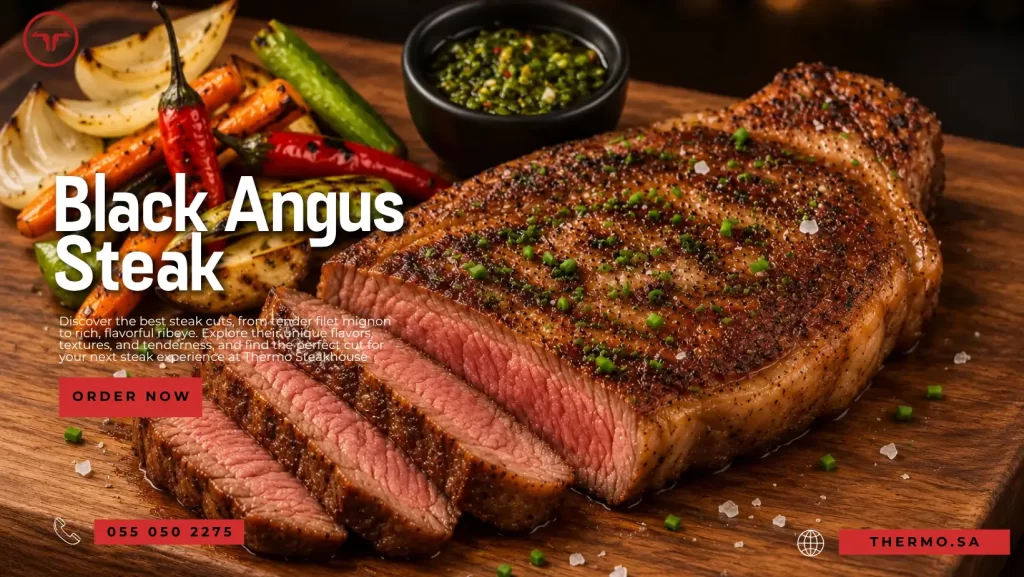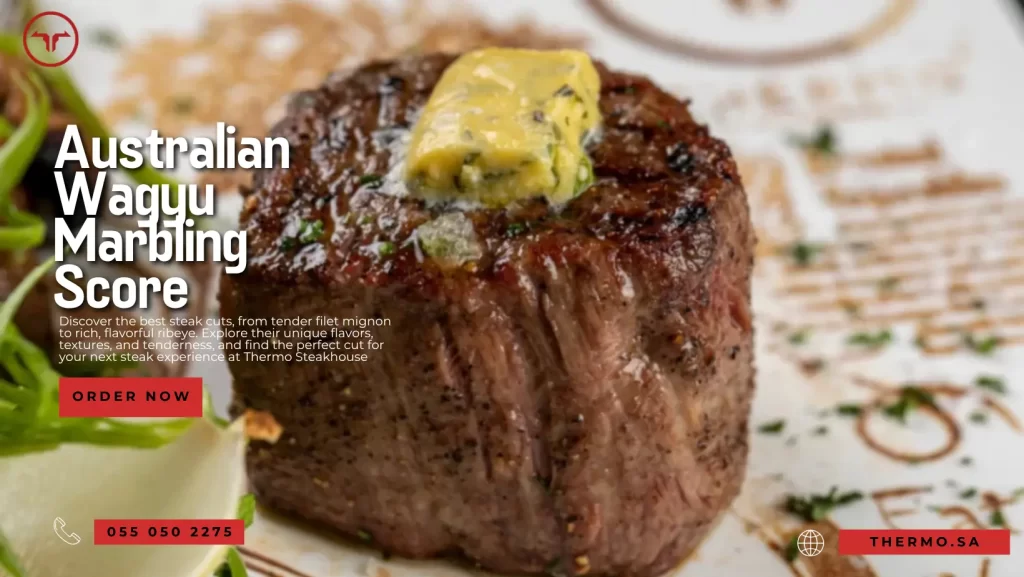
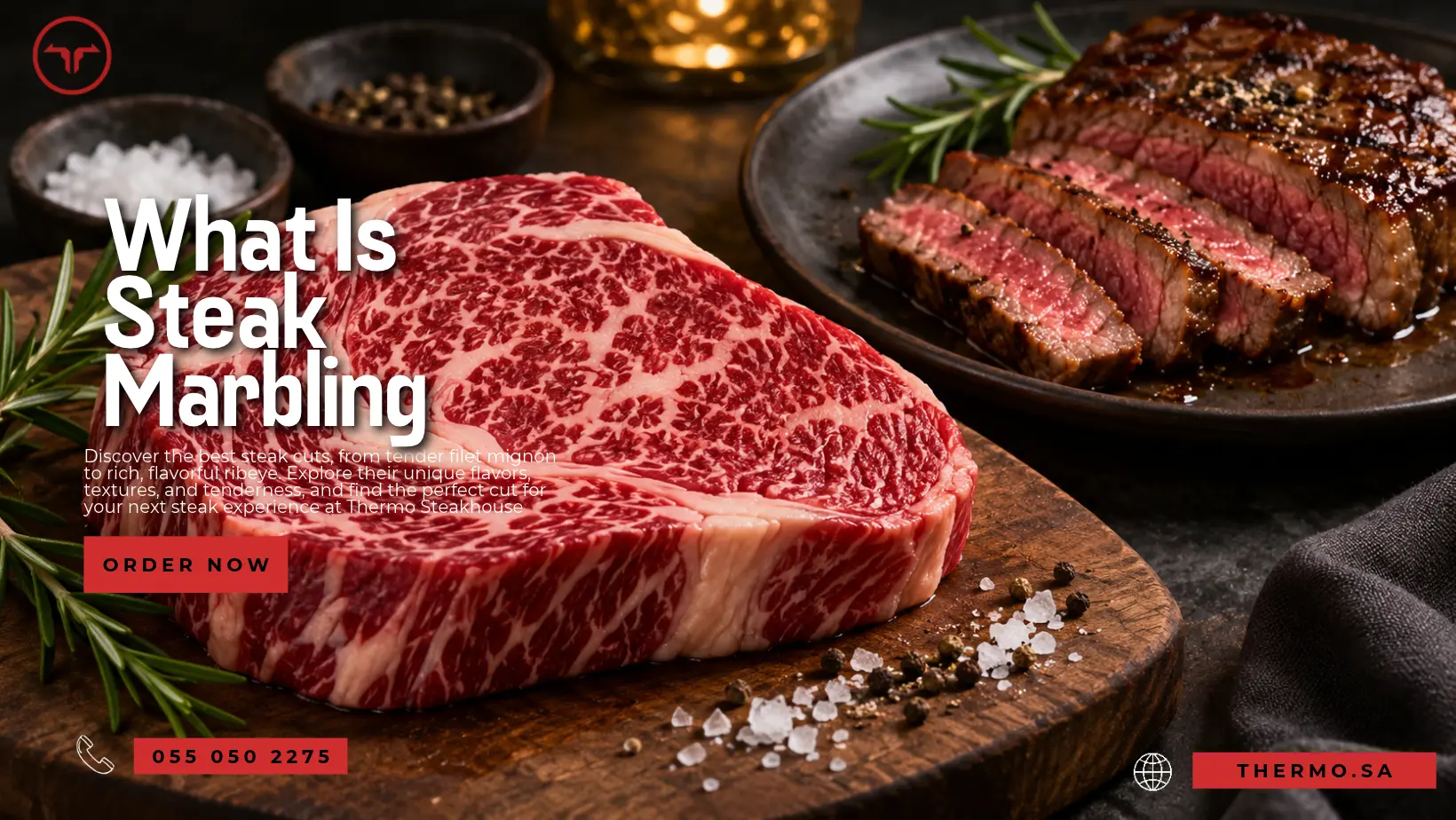
Two steaks can have the same weight and arrive with the same golden crust, yet feel completely different with the first bite. One tastes lean and firm; the other feels richer and more succulent. Those small white threads running through the meat help explain why. What Is Steak Marbling? It is the fat distributed inside the muscle, and understanding it makes choosing your next steak much easier. At Thermo, that knowledge helps you explore the difference between Black Angus, Australian Wagyu, and other steak options with more confidence.
What Is Steak Marbling, Exactly?
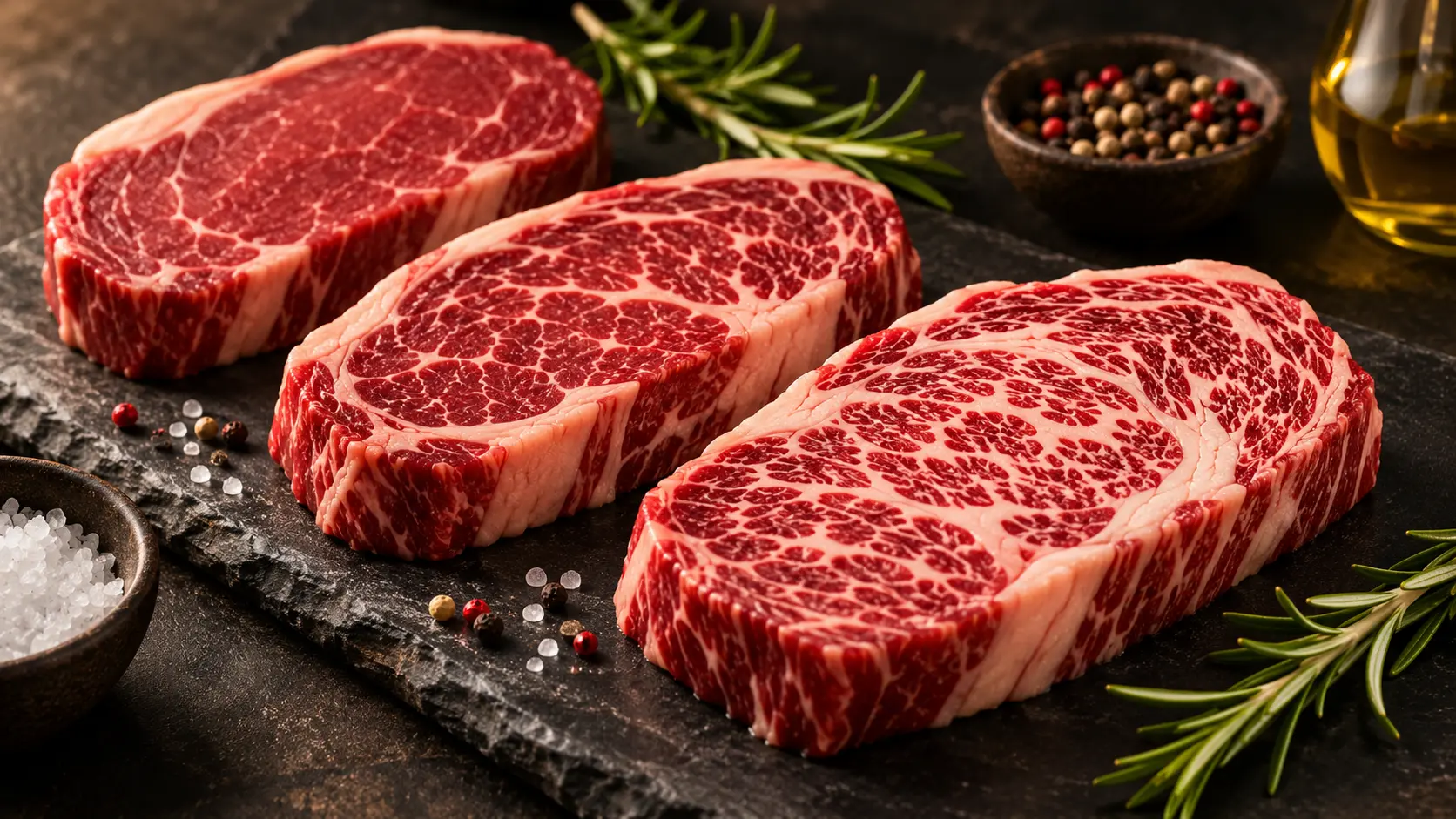
Steak marbling is intramuscular fat: the small flecks and streaks of fat found within the muscle. Its name comes from the way those pale lines resemble the patterns in marble.
Look inside the red meat rather than around its outside edge. That is where you will find marbling. A thick strip of fat along the side is a different feature, even if it is the most noticeable white area on the steak.
When browsing the Thermo menu, this distinction helps you ask a more useful question: how much fat runs through the cut, rather than simply how much fat is visible overall?
What Is Steak Marbling Compared With a Fat Cap?
A fat cap sits outside the muscle. Marbling sits within it. A steak can have a substantial outer fat layer without having much intramuscular fat.
| Feature | Where it appears | What to notice |
| Marbling | Within the muscle | Small flecks and branching streaks |
| Fat cap | Along an outer edge | A continuous layer outside the lean meat |
| Seam fat | Between separate muscles | Larger bands separating sections |
At Thermo, describe the eating experience you want instead of asking for a steak with “lots of fat.” That phrase could mean several different things.
What Is Steak Marbling’s Effect on Flavour?
The answer to What Is Steak Marbling goes beyond appearance. Intramuscular fat contributes to flavour, perceived juiciness, and the overall eating experience. As fat softens during cooking, it influences how rich the steak feels in your mouth.
But marbling is one part of a larger picture. The cut, ageing, handling, and cooking also affect the result. A highly marbled steak can still disappoint if those other elements are poorly managed.
For your next Thermo visit, think about whether you enjoy a rich, lingering bite or prefer something lighter. That preference is more useful than automatically choosing the highest number.
Does More Marbling Always Mean Better Steak?
If you are asking What Is Steak Marbling to find the “best” steak, start by defining what best means to you.
More marbling can improve eating quality when other conditions are comparable. It does not mean every diner will prefer the richest option, or that a leaner steak cannot be enjoyable.
Someone planning a full steak dinner may want a different level of richness from someone sharing several small tastes. Portion size matters to that decision, too.
Use marbling as a guide to the style of experience you want. At Thermo, explain your preferences and ask which available cut fits them.
How to Read a Marbling Score Without Guessing
Once you understand What Is Steak Marbling, menu numbers become easier to interpret. The important step is identifying the grading system before comparing scores.
Australian Marbling Scores
Australian AUS-MEAT marbling assessment describes the amount of intramuscular fat visible in the ribeye assessment area. You may encounter scores presented from 0 to 9+, with higher numbers indicating more marbling.
These are scores, not fat percentages. MB4 does not mean four percent fat, and a number alone does not tell you the breed, portion size, or complete eating quality.
Thermo lists Black Angus MB4+ and Australian Wagyu 6/7 on its homepage. Use those descriptions as starting points for asking about the current selection.
USDA Prime, Choice, and Select
USDA quality grading uses a different framework. Marbling and maturity are important grading factors. Prime generally has more marbling than Choice, while Select is typically leaner.
Do not treat those grade names as direct numerical equivalents to Australian scores. If a menu uses several systems, compare like with like and ask for clarification.
Wagyu and Angus: Breed Names Are Not Marbling Grades
Another useful part of What Is Steak Marbling is separating breed from grade. “Angus” identifies a cattle breed; it does not automatically establish a particular marbling level. Wagyu is associated with a strong capacity for marbling, but the name alone does not identify one fixed score.
A practical way to read a description is to separate four pieces of information:
- Breed or breed description: Angus or Wagyu.
- Origin: where the beef comes from.
- Cut: the part being served.
- Grade or score: the assessment system and result.
At Thermo, ask about the combination rather than relying on one impressive-sounding label.
Marbling and Dry Ageing Do Different Jobs
The question What Is Steak Marbling often comes up alongside dry-aged beef, but these terms describe different things.
Marbling is fat already present within the muscle. Dry ageing is a controlled process applied to beef after slaughter. It does not create new intramuscular fat.
That means a steak can be both marbled and dry-aged. These are not competing categories.
Thermo features dry-aged ribeye alongside Black Angus and Australian Wagyu. When choosing, consider whether your curiosity is about richness, the character of aged beef, or a particular cut. Ask what distinguishes the options currently available rather than assuming every premium description means the same experience.
Choose Your Steak by Appetite, Not Just Appearance
Understanding What Is Steak Marbling should make ordering simpler. Try starting with one clear preference:
| Your preference | What to ask about |
| A richer eating experience | More highly marbled available options |
| A lighter overall meal | Leaner choices and suitable portion sizes |
| A comparison between styles | Available Angus and Wagyu cuts |
| Interest in aged beef | The current dry-aged selection |
Browse the Thermo steak menu before your visit, then ask about the cut, weight, price, and availability. This keeps the decision connected to the meal you actually want.
Explore the Difference at Thermo in Al Khobar
Learning What Is Steak Marbling becomes more useful when you connect the explanation to your own preferences. At Thermo, explore the listed Black Angus, Australian Wagyu, and dry-aged ribeye options, then ask the team to explain the available choices.
Tell them whether you prefer a richer bite, a lighter meal, or a steak to share. You do not need to memorise a grading chart to have a useful conversation.
You can also get directions to Thermo Steakhouse in Al Andalus, Al Khobar. Check availability and confirm your reservation before visiting.
A Better Question for Your Next Steak Dinner
What Is Steak Marbling? It is the fat within the muscle that helps shape flavour, richness, and perceived juiciness. Knowing that gives you a practical way to read a menu without confusing a breed name, a score, and an ageing method.
For your next meal at Thermo, choose around your taste rather than a number alone. Explore the menu, ask about the current cuts, and find the balance of richness and portion size that suits your evening.
Frequently Asked Questions
What Is Steak Marbling Made Of?
It is intramuscular fat distributed within the meat muscle. It appears as small white flecks and streaks in a raw steak, rather than just a layer along its edge.
Is Marbling the Same as Gristle?
No. Marbling is fat. Gristle refers to tough connective tissue. A white area in a steak is not automatically marbling; its location and structure matter.
Can a Steak Be Tender Without Much Marbling?
Yes. Marbling is only one factor affecting eating quality. The muscle, ageing, and preparation also matter, so a lean appearance alone does not establish whether a steak will be tender.
Does a Higher Marbling Score Mean a Higher Fat Percentage?
Within the same assessment system, a higher score indicates more visible marbling. However, the score itself is not a percentage. Do not read MB6 as six percent fat or directly compare numbers from unrelated grading systems.
Which Marbled Steaks Can I Explore at Thermo?
The Thermo homepage lists Black Angus MB4+ and Australian Wagyu 6/7. Check the current menu and ask the team about available cuts, weights, and prices before deciding.