A steak menu can tell you several things at once: the breed, the cut, a marbling score, and sometimes an aging method. Understanding which detail means what makes ordering much easier. Black Angus Steak refers to the beef’s breed background rather than one particular cut or cooking style. At Thermo Steakhouse in Al Khobar, that description appears across several dishes, giving you different ways to explore it. Here is how to read the name, understand the likely eating experience, and choose a plate that matches your preferences.
What Does Black Angus Steak Actually Mean?
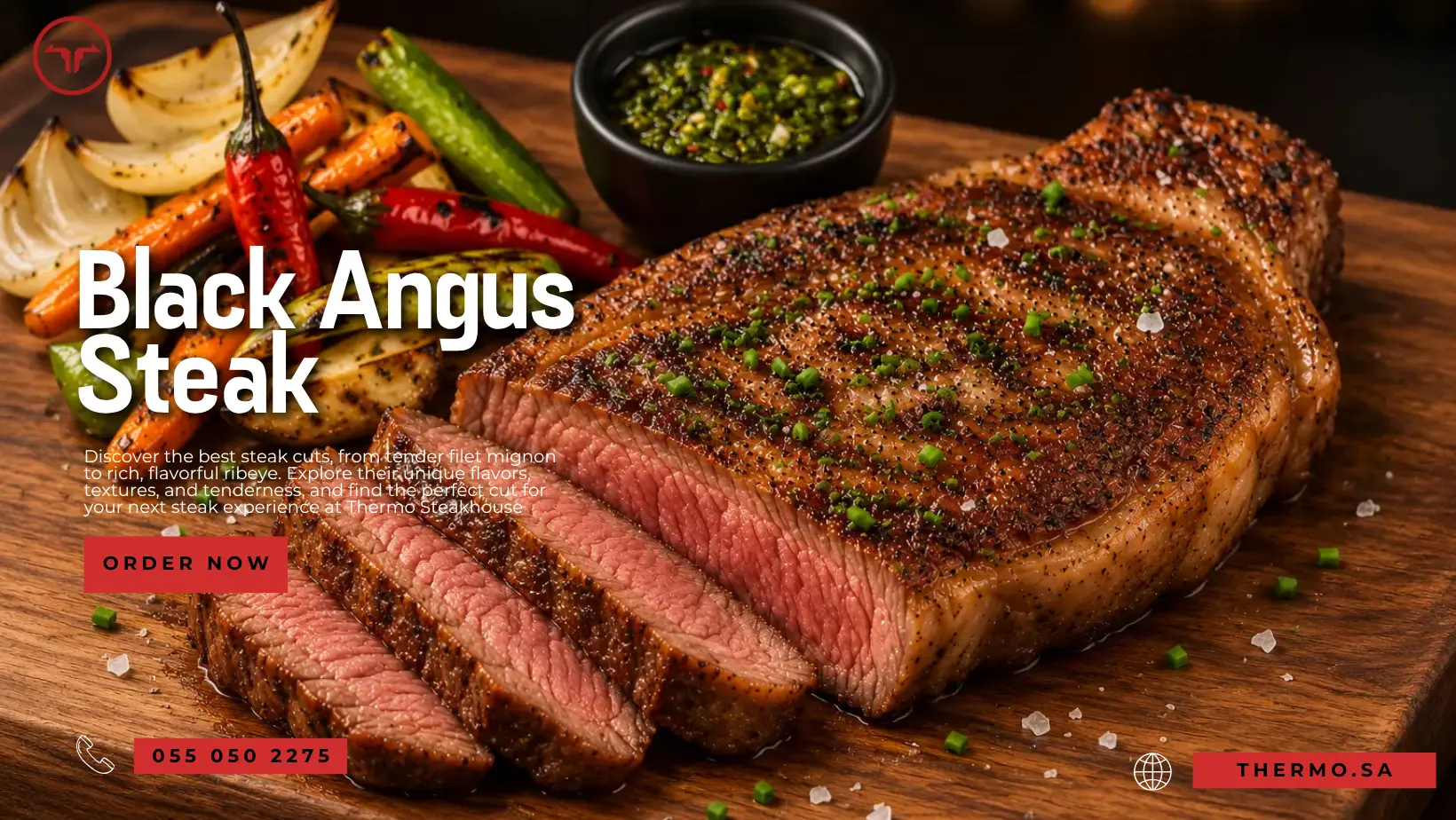
Black Angus refers to black-coated Angus cattle. On a menu, the term describes the beef’s breed background; it does not tell you whether you are ordering ribeye, tenderloin, or another cut.
The exact requirements behind an Angus label can vary between suppliers and verification programs. Some programs check breed content and supply-chain records, while others apply their own eligibility criteria. That is why a named program, origin, and product specification provide more information than the breed description alone.
For diners, the useful distinction is simple: Black Angus Steak identifies one part of the product’s story. You still need the cut, marbling information, portion size, and preparation details to understand what will arrive at your table.
Breed, Cut, and Grade: Three Different Details
On a Black Angus Steak menu, confusion often starts when these terms appear together. A menu might describe a Black Angus ribeye with an MB score and an aging period. Those details answer separate questions.
| Menu detail | What it describes | What it cannot tell you alone |
| Black Angus | Breed background | The exact tenderness or fat content |
| Ribeye or filet mignon | The cut of beef | Its supplier or production program |
| Marbling score | Intramuscular fat under a stated system | A complete assessment of eating quality |
| Dry-aged or wet-aged | A preparation process after slaughter | The animal’s breed |
| Portion weight | The listed size | Whether sides are included |
When choosing Black Angus Steak, read the description as a whole. One impressive word should not outweigh the rest of the information.
Is It Automatically Certified Angus Beef?
No. Certified Angus Beef® is a specific brand with eligibility requirements and additional quality specifications. An Angus description does not automatically mean the product belongs to that brand.
Likewise, “Black Angus” is not another name for USDA Prime. Breed claims, branded programs, and quality grades are different categories. If certification matters to your choice, ask which program applies rather than assuming it from the menu wording.
What Flavor Should You Expect?
Many diners choose Angus beef because they enjoy a substantial, beef-forward steak experience. However, there is no single flavor that every Angus cut delivers. The muscle, fat distribution, feeding background, aging, and cooking all influence the result.
A Black Angus Steak from the tenderloin can feel noticeably different from one cut from the rib section. You may prefer the relatively delicate character of the first or the richer impression of the second.
Think about what you normally enjoy. Do you like visible fat and a fuller mouthfeel, or do you prefer a more uniform bite? Describing that preference gives your server something practical to work with.
How Marbling Shapes the Experience
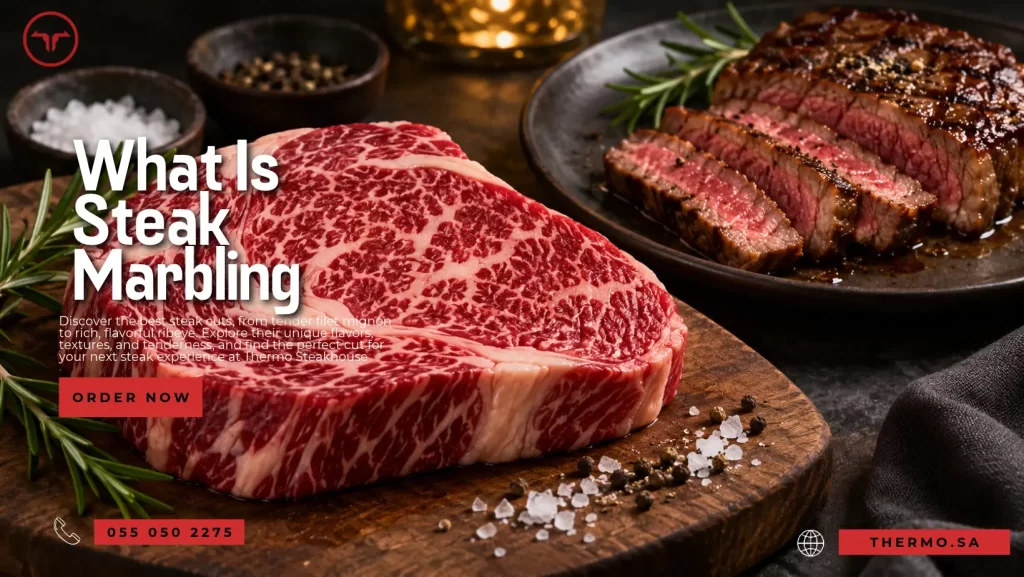
Marbling is the fine fat distributed within the muscle. It differs from an outer fat strip or a larger seam between muscles. Its amount and distribution help describe the beef, although they do not explain everything about tenderness.
In a Black Angus Steak, marbling can contribute to the perception of richness, flavor, and juiciness. Still, a higher score does not guarantee that you will personally enjoy the plate more.
Some diners welcome a richer bite; others prefer less noticeable fat. Neither preference requires choosing a different breed automatically. Start by finding a suitable cut, then consider the product’s marbling specification.
Reading MB Scores Without Overthinking Them
Thermo’s menu includes MB4+ descriptions for several Angus dishes. Treat the score as product information, not a percentage of fat or a promise that every bite will feel identical.
Different grading systems use different scales. Before comparing numbers between restaurants or products, establish which system is being used. The meaning of a “+” designation should also be understood within the supplier’s specification.
The practical question is not simply “Which number is highest?” It is “How does this cut and specification fit the texture and richness I enjoy?”
Why the Cut Matters as Much as the Name
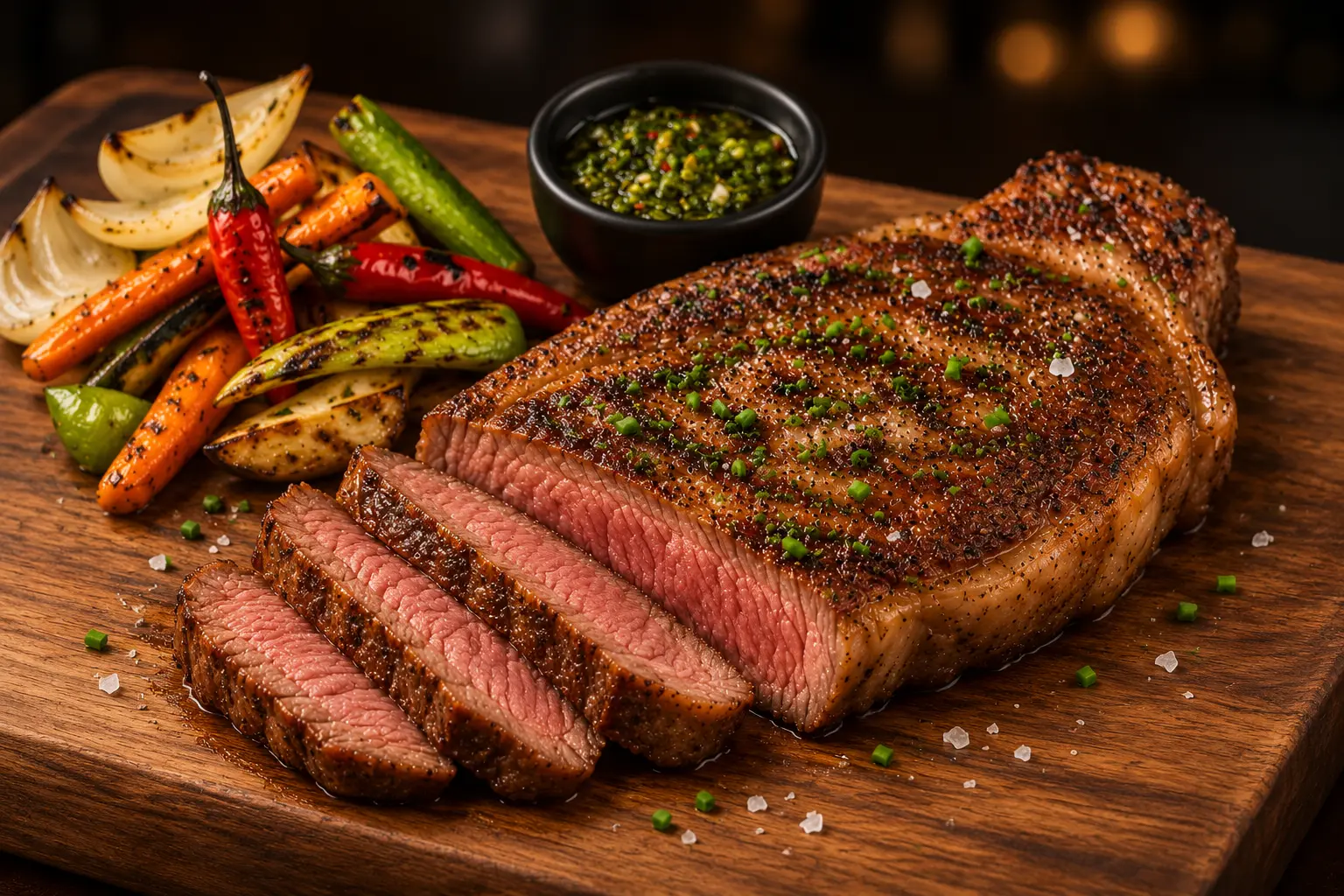
Choosing Black Angus Steak still leaves you with an important decision: which muscle do you want to eat? Tenderloin and ribeye offer different experiences even when they share a breed description.
Filet mignon comes from the tenderloin and is known for tenderness and a relatively mild flavor. Ribeye comes from the rib section and generally offers a richer character with more noticeable fat.
A tomahawk is a ribeye presented with a long rib bone. Its appearance and size change the dining format, but the bone does not turn it into a separate cattle breed.
Use the cut to narrow your Black Angus Steak choice before deciding on aging, sides, or sauces.
Black Angus Steak Options at Thermo
The most useful way to apply these details is to look at actual dishes. Thermo’s English menu lists individual portions alongside larger cuts, with descriptions that explain the cut and marbling designation.
The following examples reflect the published dish descriptions. Check current availability and ask about accompaniments when ordering, especially if you are planning a shared meal.
Filet Mignon for a Tender, More Uniform Bite
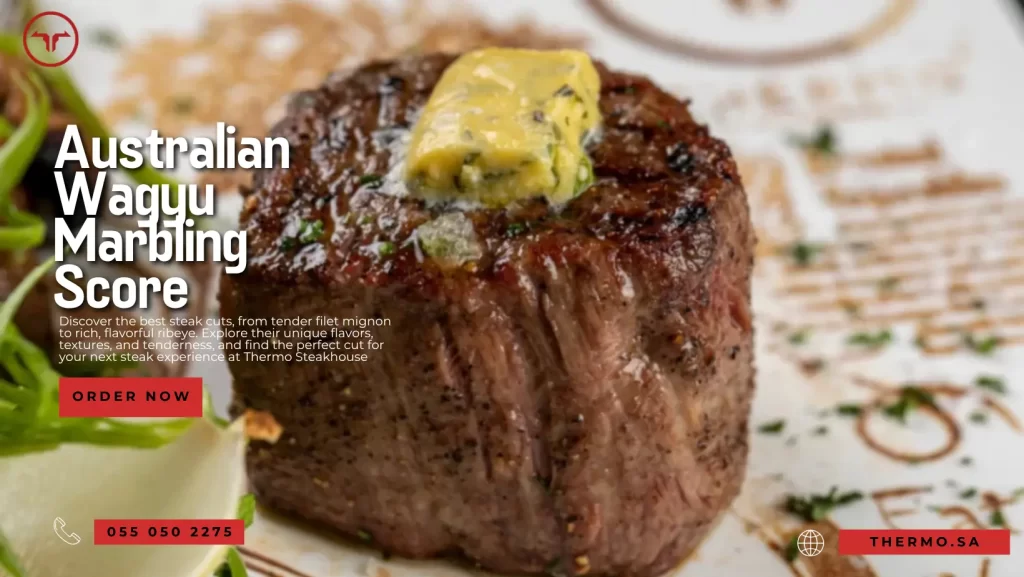
Thermo’s Filet Mignon, 7 oz is described as a Black Angus tenderloin cut with an MB4+ designation.
Consider this option if tenderness comes first and you prefer less obvious fat within the eating experience. It provides a starting point for discussing your preferences without assuming that every tenderloin product is identical.
Ask how the dish is served and which sides complement it. Knowing the full plate helps you judge the portion more accurately than looking at the steak’s weight alone.
Dry-Aged Ribeye for an Aging-Focused Choice
The Dry-Aged Ribeye, 10 oz is listed with an MB4+ designation and a dry-aging period of at least 21 days.
This Black Angus Steak combines a ribeye cut with a distinct preparation detail. If you are curious about aging, ask what flavor character to expect rather than assuming it simply means more marbling.
Aging and marbling describe different things. Keeping them separate makes it easier to understand why two ribeye dishes may offer different experiences.
Wet-Aged Ribeye for Another Ribeye Option
Thermo also lists a Wet-Aged Ribeye, 10 oz, described as Black Angus with an MB4+ designation.
It gives ribeye lovers another option within the menu. Ask the team how its preparation and expected flavor compare with the dry-aged version, particularly if you are deciding between the two.
You do not need to know every technical detail before ordering. A clear preference for a particular flavor or texture is enough to begin the conversation.
Tomahawk for a Shared Table
The Tomahawk, approximately 1.1–1.3 kg, is described as an MB4+ Black Angus ribeye with an extra-long bone. The dish page presents it as suitable for sharing between two and three guests.
For a group choosing Black Angus Steak, this offers a different format from separate individual portions. Remember that the listed weight includes bone, and appetites, starters, and sides affect how much your table needs.
Confirm the available size and ask for portion guidance before placing the order.
What to Ask Before You Order
A few specific questions can tell you more than asking for “the best steak.” Start with your preferences, then use the menu details to make a choice.
- Which cut suits my taste? Explain whether you prioritize tenderness, richness, or less visible fat.
- What does this marbling designation mean? Ask about the specification rather than interpreting it as a percentage.
- What is included? Confirm sides, sauces, and any additions.
- How is the portion listed? Clarify bone-in weight and whether the stated weight is before cooking.
- What is available today? Check the dish you want before planning the entire meal around it.
When ordering Black Angus Steak, these questions help you choose a complete meal, not just a label.
Give the Steak Room on Your Plate
Your sides and sauce can change how you experience the beef. If you want to understand a new cut, taste a small bite before adding sauce, then try it with your chosen accompaniment.
There is no requirement to keep everything plain. The point is to discover which combination you enjoy and remember it for your next visit.
For Black Angus Steak, a useful tasting note might be “I liked the tenderness but wanted less richness,” or “I enjoyed the ribeye and would try an aged version.” That tells you more than remembering only the breed name.
Doneness matters too. Describe your preference clearly and ask for advice for the selected cut.
Choose Your Next Steak at Thermo Steakhouse
At Thermo Steakhouse, you can explore Black Angus Steak through tenderloin, aged ribeye, and a larger tomahawk format. Each option answers a different preference, from a tender individual portion to a cut intended for sharing.
Browse the Thermo menu, compare the dish descriptions, and contact the team to confirm availability and arrange your reservation. For directions, open Thermo Steakhouse on Google Maps.
A better steak choice starts with understanding the whole description. Bring your preferences to the table, and choose the experience you want to enjoy.
Frequently Asked Questions
Is Black Angus Steak Always Better Than Other Beef?
No breed name guarantees a better meal in every comparison. Cut, product specification, handling, aging, and cooking all matter. Compare specific products and choose according to your preferences rather than treating the label as a universal ranking.
Does Black Angus Mean the Meat Is Black?
No. “Black” refers to the cattle’s coat color, not a requirement for black-colored beef or a cooking method. It does not mean the steak should be charred or prepared with a dark seasoning.
Is Black Angus Steak the Same as Wagyu?
No. Angus and Wagyu describe different breed backgrounds. Either description still needs information about the cut and product specification. Avoid assuming that every Wagyu product has identical marbling or that every Angus product tastes the same.
Can Angus Beef Come From Different Countries?
Yes. Angus cattle are raised in different countries. The breed description alone does not identify where an animal was raised or where the beef was produced. Ask about the origin of the specific product if that information matters to you.
Which Black Angus Cut Should I Try First?
Start with your texture preference. Filet mignon is worth considering for tenderness, while ribeye may appeal if you enjoy a richer bite. Ask the team to explain the available dishes and recommend a portion for your appetite.